
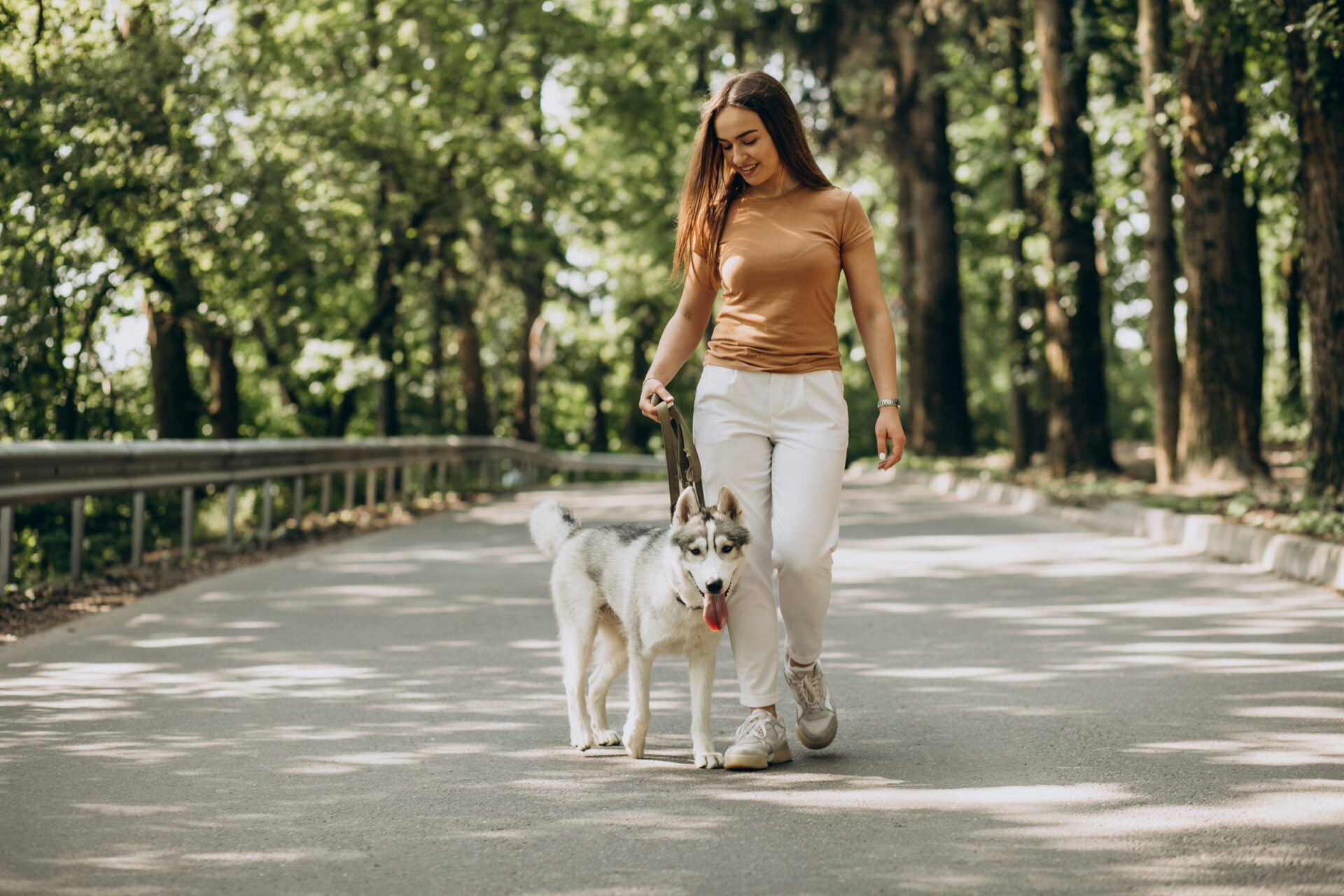
Imagine heading out for an evening dog walk. Your dog is by your side. However, rather than taking a relaxing walk along the sidewalk, you have sore shoulders and sore arms, and you continue to pull on the leash repeatedly. You are attempting to force your dog to remain glued to your left ankle.
We see it everywhere, the classic competition-style “heel” where a dog marches in a perfect straight line, staring up, never stepping an inch ahead. A lot of pet parents assume this intense control is the only real proof of good dog training. But honestly? This rigid setup usually just makes daily walks stressful and exhausting for both of you.
The Myth Of The Forced Heel
There is a massive misconception circulating that if a dog walks even a single step ahead of its human, it is trying to rule the house or dominate the walk. It turns a regular daily walk into a constant battle over territory. Because of this pressure, owners spend the entire trip trying to maintain a tight leash and a perfect heel. When you sign up at a dog training school, you might think your primary goal is learning how to master that exact brand of military control.
But real life does not work like a competition ring. Forcing your pup to march directly behind you or right at your side completely ruins the fun of going outside. Dogs don’t experience the neighborhood through their eyes the way we do. They use their noses. When we constantly yank them away from every single patch of grass, we aren’t showing leadership. We are just creating a really frustrated animal.
Why A Rigid Stroll Frustrates Your Pup
When a walk turns into a strict forced march, dogs miss out on all their mental stimulation. The proper walk will fulfill their sense of curiosity and allow them to make sense of everything going on in the neighborhood. Depriving them of such an opportunity will only result in pent-up frustration, which will eventually surface within the house in the form of excessive barking or destructive behavior.
This is exactly where an experienced dog trainer can help change your mindset. True leadership has nothing to do with micromanaging, where every single paw lands. This is all about creating a safety zone while also allowing room for your dog to just be themselves. Allowing your dog to take the lead on a nice and loose leash allows him to think and relax their senses.
Embracing Guidance From Behind
Leading from behind means realizing your dog can be a couple of steps out in front while you still stay completely in control of the direction. You do not need them stuck to your ankle to guide them. A loose-leash walk gives them space to move ahead and check out their surroundings, as long as they aren’t physically dragging you down the street.
Making this work in real life just takes a few simple, daily habits. First, use the loose-leash rule. Let them walk ahead, but the second the leash goes tight, stop moving entirely. Stand still. Wait until they turn around or step back to loosen the line before you take another step forward. Second, reward check-ins. Give them a quick treat or some praise whenever they choose to look back at you on their own. It teaches them that paying attention pays off. Third, change your direction randomly. Turn a different way without warning. It forces them to keep an eye on where you are heading, even when they are exploring out in front.
When you practice these small changes, structured dog obedience training in Singapore stops feeling like a physical wrestling match and starts feeling like a normal, relaxed routine.
Rethinking The Walk With PerfectK9
At PerfectK9, we believe daily walks should be something you both look forward to, not a stressful chore full of pulling and tension. Our whole approach centers on lifestyle communication training made for real, everyday life, rather than forcing animals to hit rigid competition standards.
Every single dog learns at a different pace and deals with different neighborhood distractions. Instead of drilling an artificial heel, we focus on helping owners set up practical boundaries that build up confidence, calm behavior, and safety out on the street.
Enjoying The Journey Together
Turning your daily walk into a peaceful routine takes time, a lot of patience, and letting go of old ideas about dominance. Letting your dog explore out in front on a slack leash opens up a much better way to navigate the neighborhood together.
If you are constantly struggling with a heavy puller, getting some professional guidance can change everything. Working with the best dog trainer in Singapore has to offer gives you the practical, real-world skills to guide your pet quietly, turning your daily walks back into the fun highlights they are supposed to be.
FAQs
Q. Why does my dog always try to walk ahead of me on walks?
Dogs naturally walk much faster than humans do. Plus, they are incredibly excited to check out the neighborhood through smells. Walking ahead doesn’t mean they want to dominate you; they are just curious and moving at their normal pace.
Q. Can a dog still be well-behaved if they aren’t walking perfectly at my heel?
Yes, absolutely. Real obedience means your dog listens to your direction, keeps the leash loose, and checks in with you often. A tight heel is great for crowded spaces, but a relaxed forward position is perfect for daily exercise.
Q. What should I do if my dog starts pulling heavily toward a scent?
The moment the leash tightens up, stop walking immediately. Stand completely still. Wait for your dog to turn back or ease up on the tension himself. Do not yank the leash back; only move forward when the line goes slack.
Q. Is a loose-leash walk harder to teach than a traditional strict heel command?
It is usually much easier because it works with your dog’s natural curiosity instead of fighting it. By rewarding voluntary check-ins and stopping whenever the leash gets tight, your dog quickly figures out how to keep moving forward.